Elevate Your Space: Infusing Spiritual Serenity with Mandala Designs
In today's fast-paced world, creating a sanctuary within your home has become more important than ever. The spaces we inhabit directly influence our mental well-being, emotional stability, and spiritual growth. One of the most effective ways to transform your environment into a haven of peace and tranquility is through the incorporation of mandala designs. These ancient geometric patterns, rich with spiritual significance and aesthetic beauty, have the power to elevate any space from ordinary to extraordinary. At MaddenMurphy, we understand the profound impact that thoughtfully curated design elements can have on your living environment, and we're here to guide you through the journey of infusing spiritual serenity into your home.
Understanding the Essence of Mandalas
Before we explore how to integrate mandala designs into your space, it's essential to understand what mandalas truly represent and why they hold such significance across cultures and spiritual traditions.
The Historical and Cultural Significance of Mandalas
Mandalas have been used for thousands of years across various cultures and spiritual traditions. The word mandala itself comes from Sanskrit, meaning circle or center. These intricate geometric patterns are found in Hindu temples, Buddhist monasteries, Islamic art, and indigenous cultures worldwide. Each tradition has interpreted and utilized mandalas in unique ways, but they all share a common purpose: to represent wholeness, unity, and the connection between the individual and the universe.
In Hindu tradition, mandalas are used as meditation tools and spiritual diagrams that represent the cosmos and the divine. Buddhist mandalas, particularly those created by Tibetan monks, are elaborate sand paintings that symbolize the impermanence of life and the path to enlightenment. Islamic geometric mandalas reflect the infinite nature of Allah and the harmony of creation. Indigenous cultures have created their own versions of circular, mandala-like patterns that represent the cycles of nature and the interconnectedness of all living things.
The universal appeal of mandalas transcends religious and cultural boundaries. Whether you approach them from a spiritual perspective or simply appreciate their aesthetic beauty, mandalas offer something profound to anyone who engages with them. They serve as visual reminders of balance, harmony, and the sacred geometry that underlies all existence.
The Spiritual and Psychological Benefits of Mandala Designs
The impact of mandalas extends far beyond their visual appeal. Numerous studies have demonstrated the psychological and spiritual benefits of engaging with mandala designs. When you gaze upon a mandala, your eyes naturally follow the geometric patterns toward the center, creating a meditative experience that calms the mind and reduces stress and anxiety.
The symmetrical nature of mandalas has a naturally soothing effect on the human psyche. Our brains are drawn to patterns and symmetry, and when we encounter them in mandala designs, our nervous system responds by entering a more relaxed state. This is why mandalas have been used in therapeutic settings to help individuals manage anxiety, depression, and trauma.
From a spiritual perspective, mandalas serve as tools for self-discovery and personal transformation. By meditating on a mandala, you can access deeper levels of consciousness and gain insights into your true nature. The journey from the outer edges of the mandala toward its center mirrors the spiritual journey inward, toward your authentic self and connection with the divine.
The color psychology associated with mandalas also plays a significant role in their transformative power. Different colors carry different vibrations and meanings. Red mandalas promote energy and passion, blue mandalas encourage calm and communication, green mandalas foster healing and growth, and purple mandalas inspire spiritual awakening and intuition. By choosing mandalas in colors that resonate with your current needs and intentions, you can amplify the positive effects they have on your space and your consciousness.
Assessing Your Space and Setting Intentions
Before you begin incorporating mandala designs into your home, take time to assess your current space and clarify your intentions for transformation.
Evaluating Your Current Environment
Walk through each room of your home with fresh eyes. Notice the colors, textures, lighting, and overall energy of each space. Which rooms feel welcoming and peaceful? Which ones feel chaotic or uninspiring? Pay attention to how different spaces make you feel emotionally and physically. This assessment will help you identify which areas would benefit most from the addition of mandala designs.
Consider the architectural features of your space. Do you have blank walls that could serve as a canvas for mandala artwork? Are there specific corners or areas that feel empty or lacking in visual interest? Understanding the physical layout of your space will help you determine the best placement for mandala designs.
Also evaluate the existing color palette and design aesthetic of your home. While mandalas are versatile and can complement various design styles, you'll want to choose mandala designs that harmonize with your existing décor. This doesn't mean everything needs to match perfectly, but rather that the mandala designs should feel like a natural and intentional addition to your space rather than an afterthought.
Clarifying Your Spiritual and Aesthetic Intentions
Take time to reflect on what you hope to achieve by incorporating mandala designs into your home. Are you seeking greater peace and tranquility? Do you want to create a dedicated meditation or yoga space? Are you looking to enhance your creativity or spiritual practice? Are you simply drawn to the beauty and elegance of mandala designs?
Your intentions will guide your choices regarding which mandala designs to select, where to place them, and how to integrate them with other elements in your space. If your primary intention is to create a meditation space, you might choose a large mandala artwork as a focal point. If you're looking to add subtle spiritual touches throughout your home, you might incorporate smaller mandala designs in multiple rooms.
Consider also what colors and styles resonate most deeply with you. Do you prefer intricate, detailed mandalas or simpler, more minimalist designs? Are you drawn to traditional mandala patterns or contemporary interpretations? Do certain color combinations make you feel more at peace than others? These preferences will help you select mandala designs that not only look beautiful in your space but also feel authentically aligned with your spiritual path.
Choosing the Right Mandala Designs for Your Space
With countless mandala designs available, selecting the right ones for your home requires thoughtful consideration of several factors.
Understanding Different Mandala Styles and Patterns
Mandala designs vary widely in their complexity, cultural origin, and symbolic meaning. Traditional mandalas feature intricate geometric patterns with multiple layers, often incorporating sacred symbols and spiritual significance. These designs are perfect for those seeking a deeper spiritual connection and are willing to invest in high-quality, detailed artwork.
Contemporary mandala designs offer a more modern interpretation of traditional patterns. These might feature simplified geometry, bold colors, or abstract elements while still maintaining the essential circular, symmetrical structure that defines a mandala. Contemporary designs are excellent for those who appreciate the aesthetic beauty of mandalas without necessarily seeking traditional spiritual significance.
Minimalist mandalas strip away excess detail to focus on clean lines and simple geometric shapes. These designs work particularly well in modern, Scandinavian, or minimalist interior design schemes. They provide the calming benefits of mandala designs without overwhelming a space visually.
Bohemian mandalas often feature organic elements, flowing lines, and a more relaxed approach to symmetry. These designs appeal to those with eclectic, bohemian, or artistic sensibilities and can add warmth and personality to a space.
Mandala designs also vary in their cultural origins. Hindu mandalas, Buddhist mandalas, Islamic geometric mandalas, and indigenous circular patterns each carry their own unique aesthetic and spiritual significance. Choosing designs that resonate with your personal spiritual path or aesthetic preferences will ensure that your space feels authentic and meaningful.
Selecting Colors That Enhance Your Space
The color of your mandala designs plays a crucial role in determining the energy and atmosphere they bring to your space. Consider both the psychological effects of different colors and how they will coordinate with your existing décor.
Warm colors like red, orange, and yellow create energy, warmth, and vitality. These colors are excellent for spaces where you want to encourage creativity, motivation, and social connection. A warm-toned mandala in your home office or creative studio can inspire productivity and innovation.
Cool colors like blue, green, and purple promote calm, healing, and spiritual awareness. These colors are ideal for bedrooms, meditation spaces, and bathrooms where you want to encourage relaxation and introspection. A cool-toned mandala in your bedroom can support better sleep and deeper rest.
Neutral colors like black, white, gray, and beige offer versatility and sophistication. Mandalas in neutral tones can complement virtually any interior design scheme and provide a subtle spiritual touch without overwhelming the space visually.
Multi-colored mandalas that incorporate a rainbow of hues can create a sense of wholeness and balance. These designs are particularly effective in spaces where you want to promote harmony and unity, such as family rooms or meditation spaces.
Consider also the lighting in your space. Natural light will reveal different aspects of your mandala designs throughout the day, while artificial lighting can create different moods and atmospheres. A mandala that looks beautiful in daylight might take on an entirely different character under warm evening lighting.
Incorporating Mandalas into Different Rooms
Each room in your home serves a different purpose and requires a different approach to mandala integration.
Creating a Sacred Meditation Space
If you're dedicated to a spiritual practice, creating a dedicated meditation space is one of the most powerful ways to incorporate mandala designs into your home. This space should feel separate from the everyday bustle of your household and serve as a sanctuary for inner work and spiritual growth.
Begin by selecting a quiet corner or room where you can meditate without interruption. This might be a spare bedroom, a corner of your living room, or even a closet that you've transformed into a meditation nook. The size of the space is less important than its ability to provide you with a sense of separation and peace.
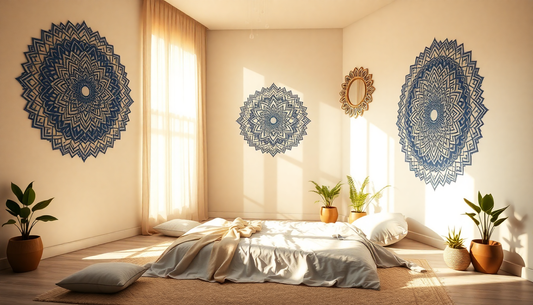
Place a large mandala artwork as the focal point of your meditation space. This could be a framed print, a canvas painting, or even a tapestry that you can gaze upon during meditation. Choose a mandala that resonates deeply with you, one that draws your attention naturally toward its center and creates a sense of calm and focus.
Complement your mandala artwork with other elements that support your meditation practice. A comfortable meditation cushion, soft lighting, perhaps some plants or natural elements, and minimal clutter will all contribute to the sacred atmosphere of your space. The mandala serves as a visual anchor for your meditation, helping to quiet your mind and deepen your practice.
Enhancing Your Bedroom with Mandala Serenity
Your bedroom is your personal sanctuary, a space where you rest, recharge, and reconnect with yourself. Incorporating mandala designs into your bedroom can significantly enhance the quality of your sleep and the overall energy of this intimate space.
Consider placing a mandala artwork on the wall opposite your bed, where you can see it as you're falling asleep and upon waking. Choose a mandala in cool, soothing colors like blues, purples, or soft greens. The geometric patterns will naturally draw your mind inward, promoting relaxation and peaceful sleep.
Alternatively, you might incorporate mandala designs through bedding, such as a mandala-patterned duvet cover or throw pillows. This approach allows you to enjoy the benefits of mandala designs while maintaining a cohesive bedroom aesthetic. Mandala bedding in soft, muted colors can create a luxurious yet peaceful sleeping environment.
You might also consider a mandala tapestry as a headboard or wall hanging. This creates a beautiful focal point while serving the practical purpose of adding texture and visual interest to your bedroom. The flowing, organic quality of a tapestry adds a touch of bohemian elegance to the space.
Transforming Your Living Room into a Harmonious Gathering Space
Your living room is often the heart of your home, a space where family and guests gather. Incorporating mandala designs here can create an atmosphere of harmony and connection while adding visual interest and sophistication to the room.
A large mandala artwork can serve as a stunning focal point above your sofa or fireplace. This draws the eye and creates a sense of balance in the room. Choose a mandala design that complements your existing furniture and décor while reflecting the energy you want to cultivate in this gathering space.
You might also incorporate mandala designs through accent pieces such as throw pillows, area rugs, or wall hangings. These smaller touches add visual interest without overwhelming the space. A mandala-patterned rug can define a seating area and add warmth and texture to your living room.
Consider also the placement of your mandala designs in relation to natural light sources. A mandala positioned near a window where sunlight can illuminate it throughout the day creates a dynamic, ever-changing visual experience. The light and shadow play across the geometric patterns can be quite mesmerizing and meditative.
Infusing Your Workspace with Creative Energy
Whether you work from home or simply use a desk area for creative projects and personal administration, incorporating mandala designs into your workspace can enhance focus, creativity, and productivity.
A mandala artwork positioned where you can see it during breaks can help reset your mind and reduce mental fatigue. The geometric patterns naturally draw your attention inward, providing a brief meditative pause that can refresh your mental energy and improve your overall productivity.
You might also incorporate mandala designs through desk accessories such as a mandala-patterned mousepad, desk pad, or wall hanging. These subtle touches create a more inspiring and spiritually aligned workspace without appearing unprofessional or out of place.
Consider the colors of your workspace mandalas carefully. Warm, energizing colors can promote creativity and motivation, while cool colors can enhance focus and concentration. You might even choose different mandala designs for different areas of your workspace to support different types of work.
Bringing Mandala Energy to Your Bathroom
Your bathroom is a space of cleansing and renewal, making it an ideal location for mandala designs. A mandala artwork in your bathroom can transform this utilitarian space into a spa-like sanctuary.
Consider placing a mandala artwork at eye level where you'll see it while washing your hands or brushing your teeth. This creates a moment of mindfulness and connection with your spiritual practice throughout your day. Choose a mandala in colors that promote calm and cleansing, such as blues, greens, or purples.
You might also incorporate mandala designs through shower curtains, bath mats, or towels. These functional items can feature mandala patterns, adding visual interest while serving a practical purpose. A mandala-patterned shower curtain can transform your shower into a more intentional, mindful experience.
Selecting the Right Medium for Your Mandala Designs
Mandala designs can be expressed through various mediums, each offering unique aesthetic and practical benefits.
Framed Mandala Artwork and Prints
Framed mandala prints are one of the most popular and accessible ways to incorporate mandala designs into your home. High-quality prints can be beautifully framed and displayed as artwork, creating a professional and polished look.
When selecting framed mandala artwork, consider the quality of the print. Look for prints made with archival-quality inks and paper that will resist fading over time. The frame itself should complement both the mandala design and your room's aesthetic. A simple black or natural wood frame works well with most mandala designs, while ornate frames can add elegance and formality.
Framed mandala artwork is versatile and can be easily changed if you want to refresh your space or rotate designs seasonally. This makes it an excellent option for those who like to evolve their home's aesthetic over time.
Mandala Tapestries and Wall Hangings
Mandala tapestries offer a more bohemian and organic approach to displaying mandala designs. These fabric hangings can cover large wall areas and add texture, warmth, and visual interest to your space.
Tapestries are particularly effective in creating a focal point in a room. A large mandala tapestry above your bed or sofa immediately draws the eye and establishes the aesthetic tone of the space. The fabric quality and drape of a tapestry add a three-dimensional quality that flat artwork cannot achieve.
Tapestries also offer practical benefits. They can help with sound absorption, add insulation to a room, and can be easily removed or changed. This makes them an excellent option for renters or those who like to frequently update their décor.
Mandala Canvas Paintings
Canvas paintings offer a more permanent and gallery-like approach to displaying mandala designs. A high-quality canvas painting can become a treasured piece of art that you enjoy for years to come.
Canvas paintings are available in various sizes, from small accent pieces to large statement artworks. The texture of canvas adds depth and visual interest that prints cannot replicate. Many canvas paintings feature hand-painted details or mixed media elements that make each piece unique.
When investing in a canvas mandala painting, consider working with an artist who can create a custom design tailored to your space and preferences. A custom canvas painting ensures that your mandala design is perfectly suited to your home and reflects your personal spiritual journey.
Mandala Textiles and Home Décor
Beyond wall art, mandala designs can be incorporated into your home through various textiles and décor items. Mandala-patterned bedding, throw pillows, rugs, curtains, and blankets allow you to infuse your space with mandala energy in subtle, functional ways.
Textiles offer the advantage of being changeable and versatile. You can easily swap out a mandala-patterned throw pillow or rug to refresh your space or adjust the energy of a room. Textiles also add warmth and texture to a space, creating a more inviting and comfortable environment.
When selecting mandala textiles, pay attention to the quality of the fabric and the durability of the design. Look for items made with natural, high-quality materials that will withstand regular use and